Acne scars are one of the most common long-term skin concerns we see at About Skin Clinic. This guide explains what causes them, the different types, and the treatment approaches our doctors use — so you can make an informed decision before booking any procedure.
What Causes Acne Scars
คลิปสั้น: รวมวิธีรักษาหลุมสิว ไม่ว่าจะหลุมแบบไหน
คลิปสั้น: โปรแกรมเบลอหลุมสิวด้วย TCA
คลิปสั้น: การรักษาหลุมสิวด้วย Pico Laser
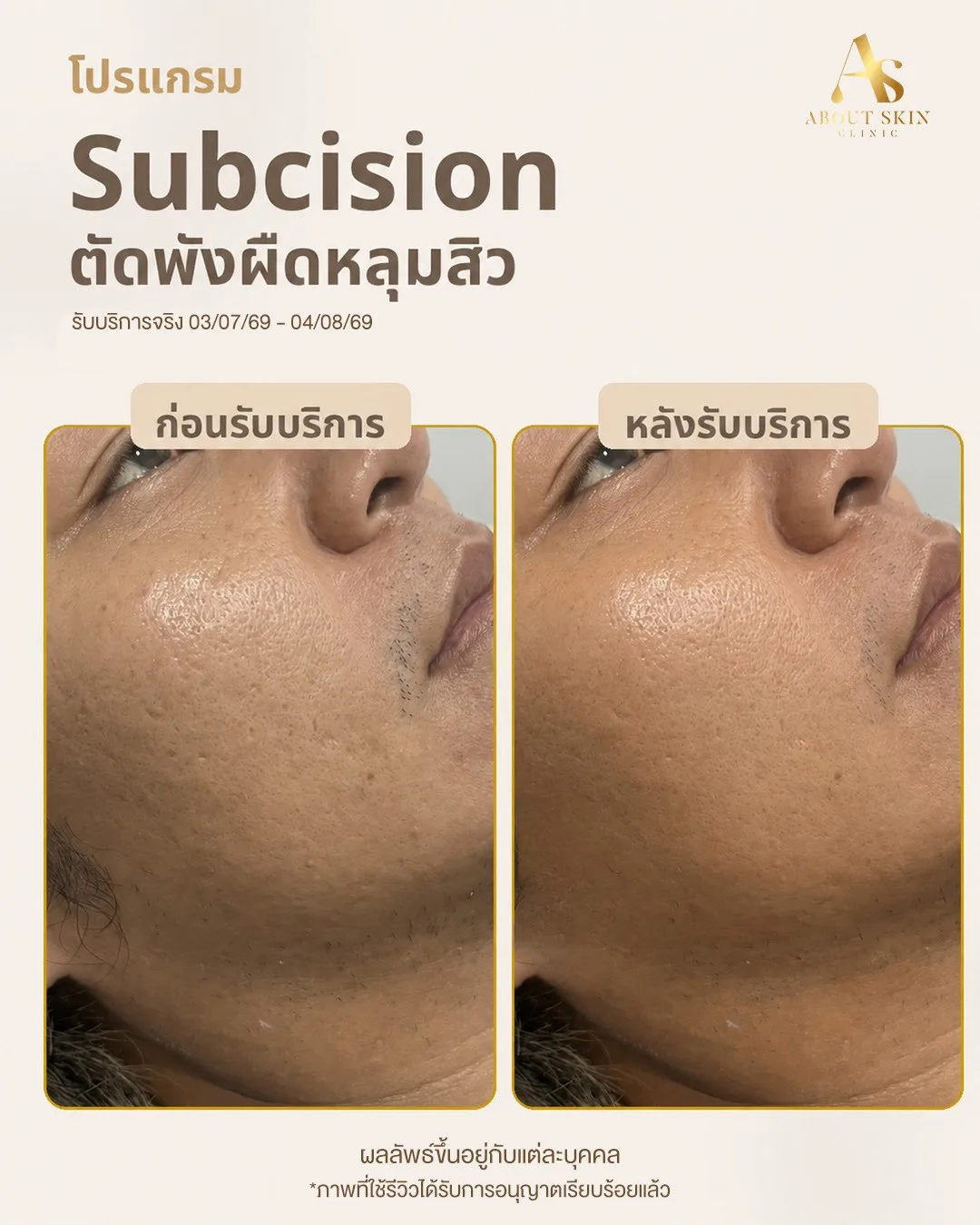
ตัวอย่างผลลัพธ์จริงจากโปรแกรม Subcision
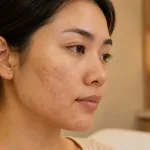
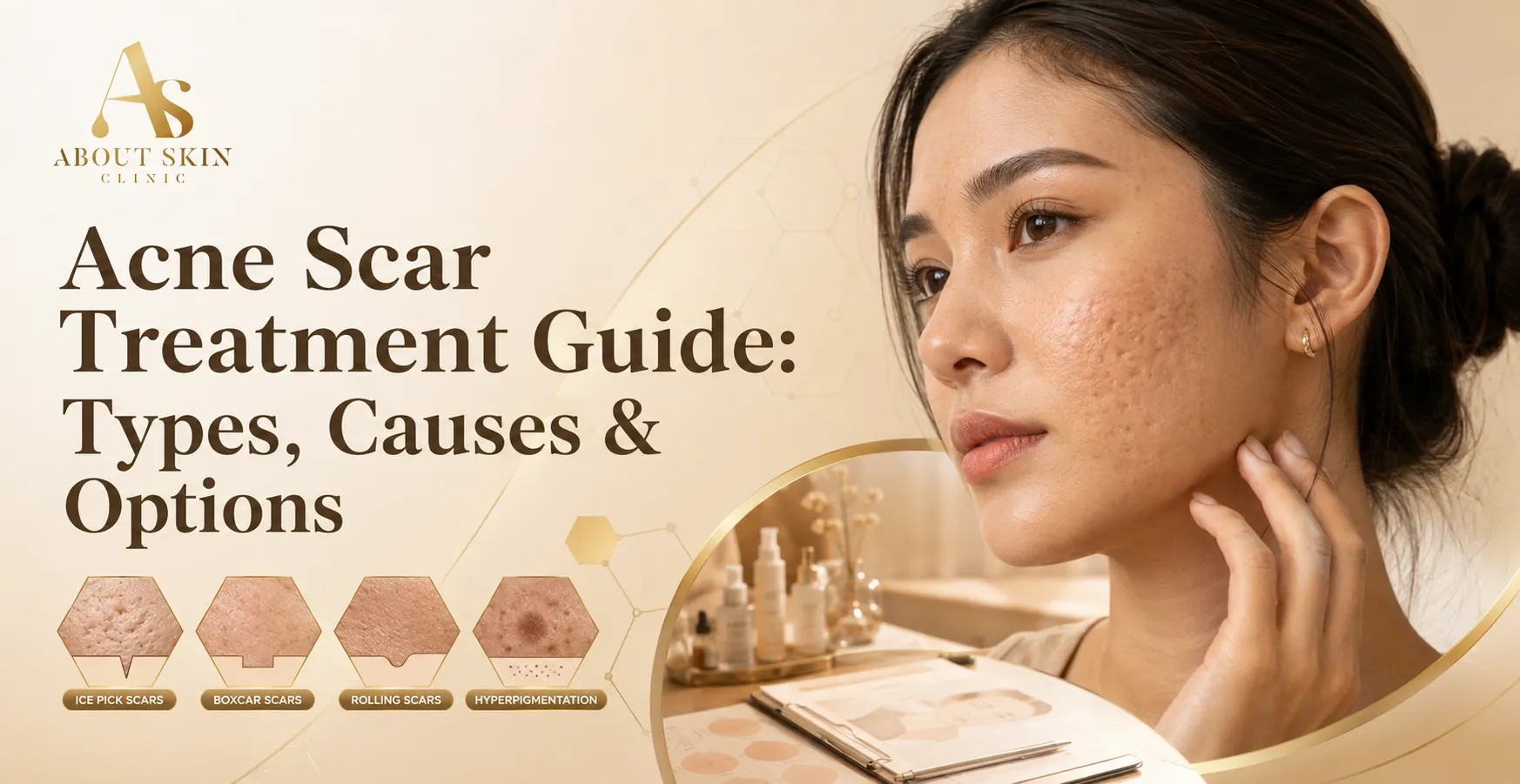
Acne scars form when inflamed acne damages the collagen structure beneath the skin. As the skin heals, it can leave depressed (atrophic) scarring in the area, or in some cases raised scarring. The severity and depth of the original inflammation strongly influence whether a lasting scar develops.
Types of Acne Scars
- Icepick scars — narrow, deep, and pointed, often the hardest to treat with surface-level methods alone
- Boxcar scars — wider scars with well-defined edges, resembling a shallow box
- Rolling scars — broad scars with sloping edges caused by fibrous bands pulling the skin down from beneath
Most people have a combination of these scar types on the same area of skin, which is why an effective treatment plan often combines more than one technique rather than relying on a single method.
Treatment Options We Offer
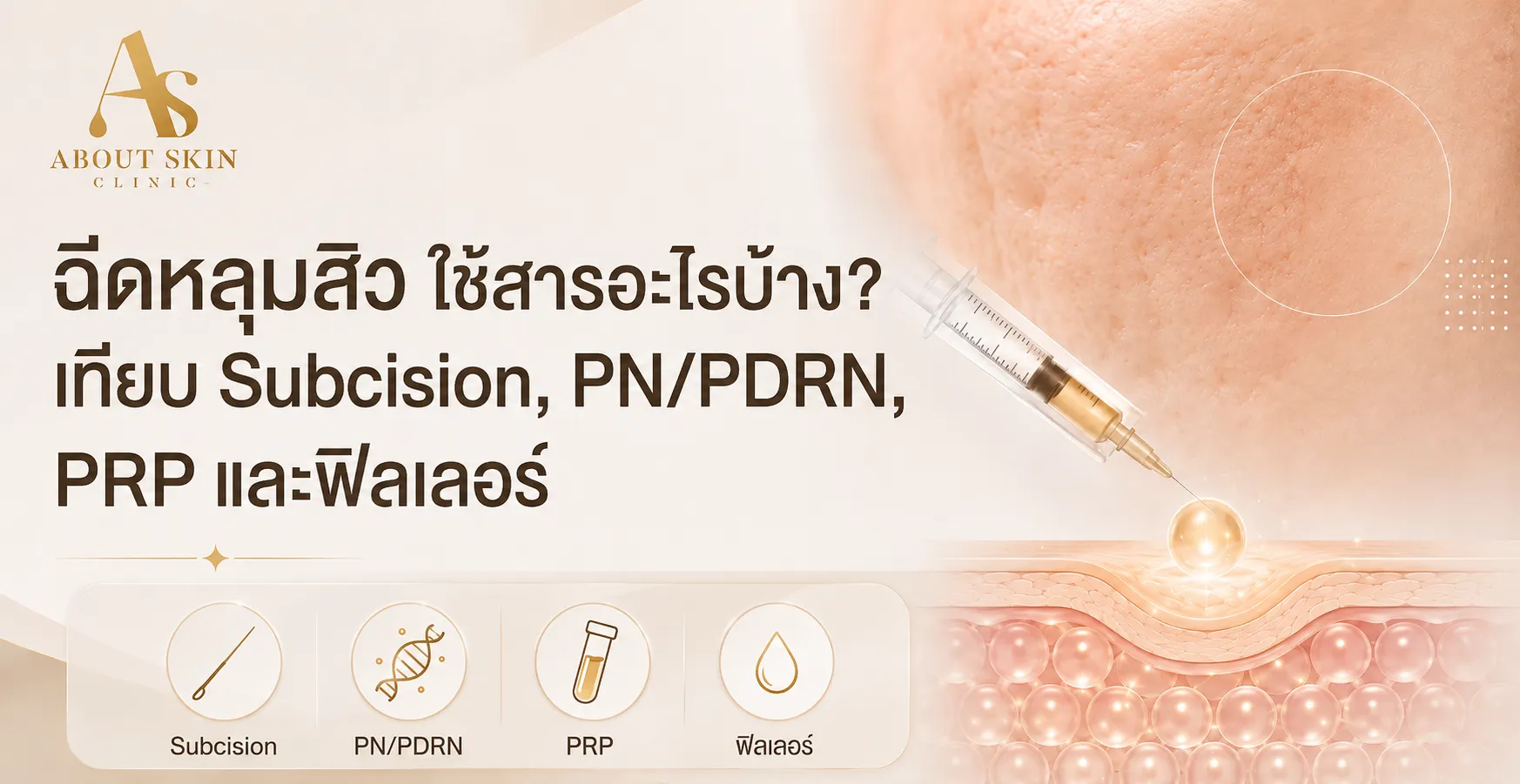
- Subcision — releases the fibrous bands beneath rolling scars, allowing the skin to lift back to a more even surface
- TCA CROSS — a targeted chemical technique applied precisely into icepick scars to stimulate collagen remodeling
- Fractional and Pico Laser — resurfacing treatments that stimulate collagen production and improve overall skin texture
A doctor evaluates your scar type, depth, and skin condition before recommending which method — or combination of methods — is appropriate for you.
What to Expect at Your Consultation
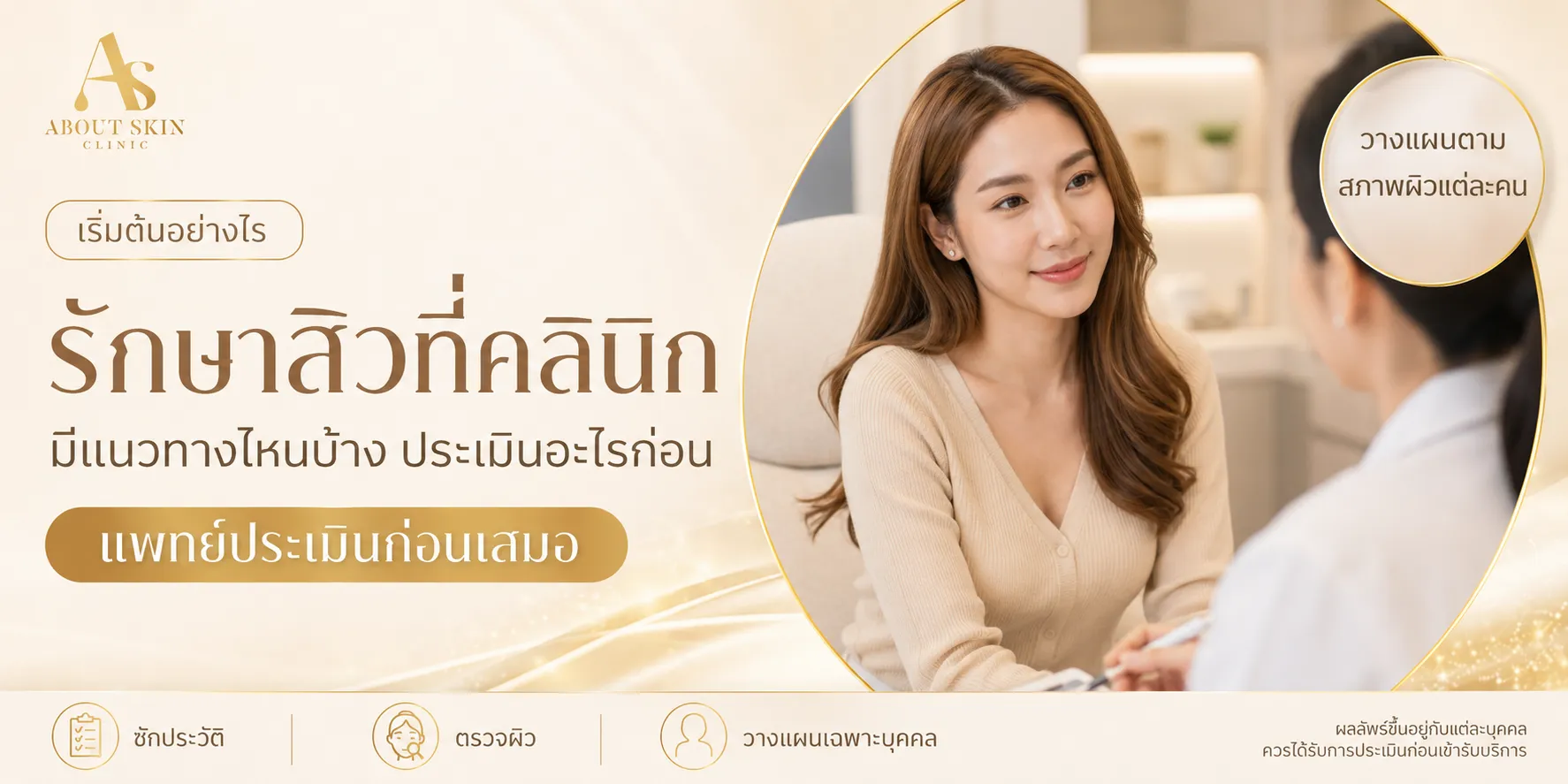
Every treatment plan at About Skin Clinic starts with a doctor’s assessment, not a sales conversation. We believe understanding your specific scar type is essential before recommending any procedure, and we do not require large course packages to be purchased upfront.
Acne scars form when inflamed acne damages the collagen structure beneath the skin. As the skin heals, it can leave depressed (atrophic) scars or, less commonly, raised (hypertrophic) scars. The deeper the inflammation, the more likely a lasting scar will form.
The three main types of atrophic acne scars are icepick scars (narrow and deep), boxcar scars (wide with defined edges), and rolling scars (shallow with sloping edges caused by tethered bands beneath the skin). Most people have a mix of these, which is why treatment plans are often combined.
Yes. Non-surgical options such as Subcision (releasing tethered scar tissue under the skin), TCA CROSS (targeted chemical treatment for icepick scars), and Fractional or Pico laser resurfacing are commonly used, often in combination depending on scar type.
This varies significantly by scar depth, type, and individual skin response. A doctor will typically recommend a multi-session plan and reassess progress along the way rather than promising a fixed number of sessions upfront.
No. Acne scars from many years ago can still be evaluated and treated. Results vary by individual, and a doctor should assess the scar’s current characteristics before recommending a treatment plan.
Post-acne marks (red or dark marks) are changes in skin color that are usually flat and fade on their own over time. Acne scars are structural — a loss of collagen that leaves the skin’s surface uneven or pitted. Flat marks and pitted scars require different approaches.
No. A responsible approach starts with a doctor’s evaluation of your scar type before any treatment plan is proposed. About Skin Clinic does not require large upfront course purchases before your first consultation.
Our Locations
About Skin Clinic operates 3 branches in Bangkok: Phetkasem 81, Bangna (Bizzo Mall), and Krungthep Kreetha. All branches offer acne scar consultations with our medical team.
This article is for general information only and is not a substitute for professional medical advice. Results vary by individual and should be discussed with a doctor before treatment.
This article was medically reviewed by About Skin Clinic’s doctors: Dr. Natcha Jarurungpong (Medical License No. 49624) and Dr. Withawin Paisakamas (Medical License No. 58065).
หากคุณกำลังมองหาการรักษา About Skin Clinic พร้อมให้คำปรึกษาโดยแพทย์ เพื่อวางแผนที่เหมาะกับคุณโดยเฉพาะ ปรึกษาแพทย์ได้ที่:
About Skin Clinic Phetkasem (เพชรเกษม 81)
โทร. 061-664-6962 Line: @aboutskinclinic
Location: Google Map สาขาเพชรเกษม 81
About Skin Clinic Bangna (บางนา (Bizzo Mall))
โทร. 061-642-2656 Line: @aboutskinclinic-bn
Location: Google Map สาขาบางนา (Bizzo Mall)
About Skin Clinic Krungthepkreetha (กรุงเทพกรีฑา)
โทร. 061-642-2356 Line: @aboutskinclinic.kt
Location: Google Map สาขากรุงเทพกรีฑา
สนใจอ่านบทความอื่นๆ ของ About Skin Clinic เพิ่มเติม
คุณเป็นคาแรกเตอร์ผิวสวยแบบไหน?
ทำแบบทดสอบ MBTI ผิวสวยตามบุคลิก 28 ข้อ ฟรี ใช้เวลาประมาณ 5 นาที แล้วดูหัตถการที่เหมาะกับบุคลิกของคุณ
เริ่มทำแบบทดสอบ